
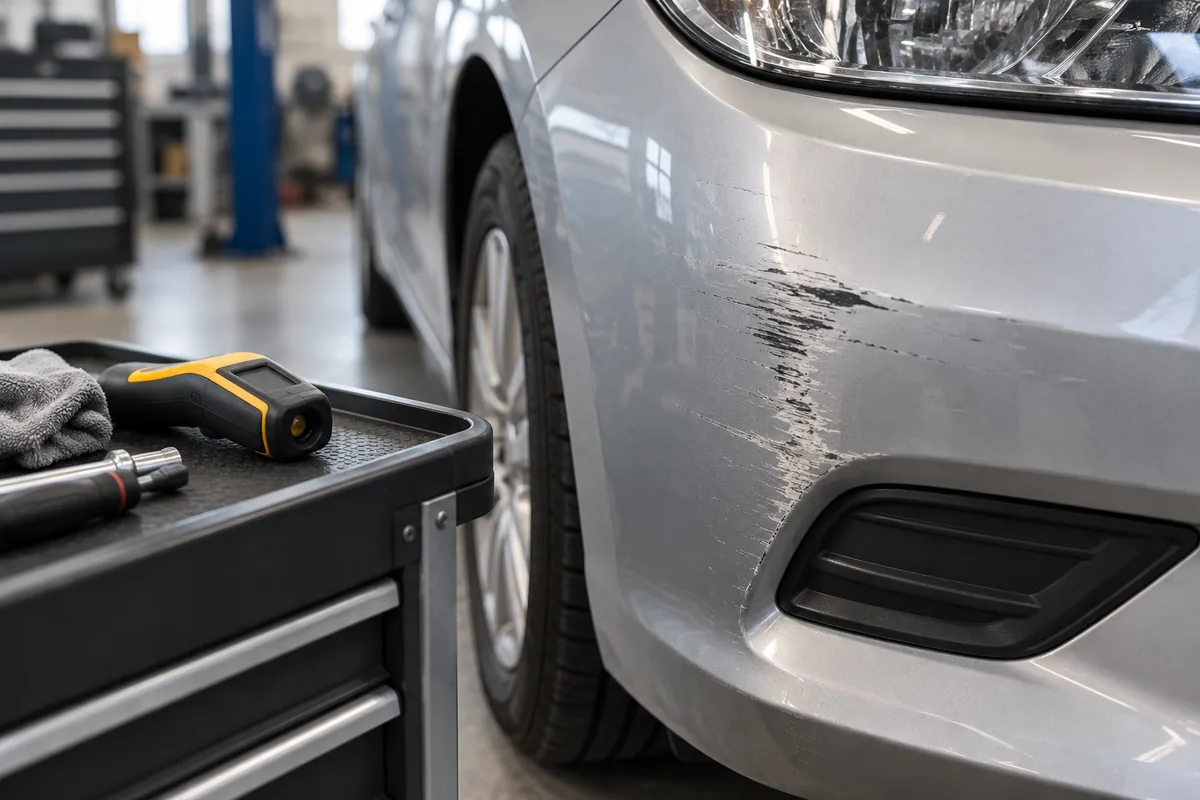
After a vehicle is damaged, repairs quickly change the original object: parts are removed, surfaces sanded and geometric deviations corrected. If a dispute is expected about the nature of damage or restoration costs, first preserve information about the vehicle's condition and the sequence of interventions.
Safety and access to the vehicle first
Do not continue driving merely to make photography easier if there are signs of brake or steering faults, fluid leaks or damage to structural members. Safety and lawful post-incident procedures take priority. Inform the expert in advance where the vehicle is located and whether it can be inspected at its storage location.
Photography: from overall views to details
Start with overall views of the vehicle and the relative positions of damaged areas. Then photograph each area more closely and individual indicators: deformation, tearing, contact marks and altered panel gaps. Place a scale alongside without obscuring the trace. A single close-up of a large chip is usually insufficient to identify the part on which it appears.
- Keep original files, rather than only forwarded images.
- Record the inspection date, mileage and available identification details.
- List known pre-existing damage separately.
- Do not present suspected hidden defects as established facts.
- Record which operations were performed after the incident and by whom.
Documents before repairs begin
Gather incident documents, inspection records, the insurer's referrals and estimates, repair orders, diagnostic documents and repair shop photographs. If repairs are already scheduled, arrange inspection and documentation before disassembly. Participation by other interested parties and notification procedures should be discussed for the specific dispute.
Handling hidden damage
An external inspection does not always reveal the condition of fasteners, reinforcements and components behind trim. During disassembly, link each defect found to a specific part and work stage: overall view, location on the vehicle, close-up and entry in the inspection record. Where possible, keep replaced parts until their further examination has been discussed.
Keep different calculation tasks distinct
Repair costs under a repair shop contract, insurance compensation calculations under OSAGO and assessment of other losses may rely on different initial conditions. Before calculating, establish the date, type of claim, damage included and applicable methodology. The correct amount cannot be selected simply by choosing the largest figure in the documents received.
If the vehicle has already been repaired, examination from materials is sometimes possible, but its limits depend on the quality of the records. Provide the specialist with the full work history and state explicitly that direct inspection of the original damage is no longer possible.